Nejnavštěvovanější odborný web
pro stavebnictví a technická zařízení budov
estav.tvnový videoportál

Regenerace domů
Archiv článků od 25.2.2013 do 25.11.2013

Archiv recenzovaných článků

zpět na aktuální články

Nový občanský zákoník
25.11.2013
Mgr. Pavel Doucha, Doucha Šikola advokáti s.r.o., Frank Bold Advokáti, s.r.o.

The paper contains basic information on the relationship between the contractor and the client as introduced by the new Civil Code. Firstly, it points to a fundamental difference in the concept of ownership of land and buildings which will not be, unlike the current state, separate. Yet the law allows exceptions to this rule, which are briefly explained in the article.
The main part of the text deals with the issue that is most pressing in construction of buildings. It is the responsibility for the quality of the work or project documentation. The paper deals with the obligation of a client to accept work in stages, addressing liability for latent defects, acceptance of the finished with reservation of latent defects and etc. In this context it should not be overlooked, that the general liable for defective work are together the contractor, subcontractors, maker of the documentation and construction supervisor. These entities may waive liability only if they demonstrate that they did not cause the defect themselves.

Český Šternberk
4.11.2013
Bc. Tomáš Seliger, DiS., Fakulta stavební VŠB-TU Ostrava

The article describes Castle Czech Šternberk and location NKP Castle Czech Šternberk, current condition of the property, the current state government Castle Providing guides, souvenirs sourcing, arranging catering, rent parts of the castle, SW Support Facility management at the castle, SWOT analysis Castle Czech Šternberk a description of the weaknesses of the castle.

28.10.2013
Ing. Radovan Nečas, Mgr. Martin Boháč, Ph.D., Vladimír Persaň

Application of the burning lime for masonry is known from the eldest ages. In history was empirically discovered, the properties of lime putties and mortars made from it can be modified adding various additives. Inorganic additives with latent hydraulic activity (natural pozzolana, thermal modified rocks) or organic additives (proteins, carbohydrates, organic acids as fruit juices etc.) were used. Beneficial influences of some additives were proven by contemporary science. Application of other additives seemed irrational from present point of view. The aim of this work was determined the influence of some historical additives on lime putties and mortar properties.

14.10.2013
Ing. Lenka Janečková, Ing. Daniela Bošová, Ph.D.

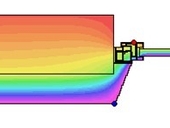
The weakest part of concrete high-rise block are their envelopes, so most of regenerations are dealing with reconstruction of existing envelopes. It related of the replacement of window openings, the installation of additional contact thermal insulation or modifications of projecting structures, including loggia glazing and, last but not least, changes in the colour shading of the surface façade layer. These adjustments can improve energy efficiency of the building, but secondary negative effects on the interior environment in terms of the daylight level must also be considered. In this study we tried to take account of both width and shape of jamb of the window with taking into account the effect daylight inside the room.

7.10.2013
Bc. Tomáš Seliger, DiS., Fakulta stavební VŠB-TU Ostrava

This article describes the pumping subsidy programs in the Czech Republic and EU divided on the subsidy programs of the Czech Republic, Emergency Programme, the preservation of architectural heritage, Program restoration of movable cultural monuments, Fond support restoration of cultural monuments, difficulties come from the EU, historic buildings and their restoration and permanently sustainable development.

23.9.2013
Ing. Milan Šmak, Ph.D., VUT Brno, doc. Ing. Bohumil Straka, CSc., VUT Brno

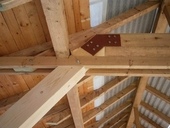
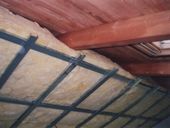
The paper is concerned with some selected defects and failures of timber structures and their rehabilitation. The paper summarises some conclusions from the construction and real behaviour of selected timber systems. Due to the fact that their load-carrying capacity and deflections are considerably affected by the load-carrying capacity of the joints, it was de-sirable to verify the influence of structural design of fasteners and connectors on the over-all behaviour of structural systems. Findings from behaviour of structures after their reha-bilitation are crucial for further research into real behaviour of timber structures.

16.9.2013
Bc. Tomáš Seliger, DiS., Fakulta stavební VŠB-TU Ostrava

The article describes what a National Heritage Institute, its scope, location of sites and activities. The following are types of divided heritage protection, (cultural monument, national monument, conservation). In conclusion, described the law on state conservation), obligations for owners and likes the cultural monuments.

12.8.2013
Ing. Václav Hadrava, Ing. Marek Sopko, Ing. Eliška Jonáková

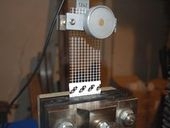
The term “ancillary materials” covers a wide range of products (mouldings, profiles etc.) which significantly influence the overall quality of works. As legislation normally does not require any verification of performance and no relevant standards exist, verification and declaration of performance is usually omitted. In reaction to that, we have specified characteristics and verification methods for adequate and consistent verification of relevant characteristics in the framework of voluntary certification.

5.8.2013
doc. Dr. Ing. Luboš Podolka, Ing. Patrik Štancl, Ph.D.

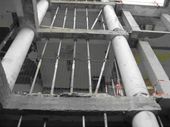
This paper describes the experience gained in planning, design and implementation of rehabilitation reinforced concrete structure, which is formed in the lower part of the reinforced concrete skeleton, from 3.NP T06B wall system with regard to the loading of the next deck above.

8.7.2013
Ing. Jan Vidim, Domat Control System s.r.o.

The design and installation of building automation systems constitutes one of the essential parts of the system input peripherals - Sensor environmental variables. Market with sensors of environmental parameters in buildings, in comparison with the sensors industry some specific characteristics.

17.6.2013
Ing. Miroslav Čermák

Energetics of structures in construction is a developing discipline that we nowadays encounter every day. Each structure rises and ends at its own life cycle period. In this article, the author evaluates an impact of the zoning plan and its studies on energetics of structures – lets save power from the beginning.

13.5.2013
Ing. Miroslav Urban, Ph.D., prof. Ing. Karel Kabele, CSc.

In relation with the implementation of the revised EU Directive 2010/31/EU on the energy performance of buildings are currently changing some of Czech legal regulations and new methodology for energy performance assessment is introduced . This article focuses on an example rating the standard family house with conventional solution of building envelope and technical systems, using the new evaluation method. For this object will be also an obligation to issue an energy performance certificate as required by the Consolidated Act No. 406/2000 Coll., as amended.

6.5.2013
Ing. Alena Hynková, CSc., Ing. Blanka Pelánková

In the second half of the last century the village changes in terms of demographics. First, the outhouses lose their importance, later, the living houses got empty. At best, the homesteads are used for weekend recreation. As a result of these changes, and due to improper construction impacts the houses dilapidate. There is material destruction and creation of static structural failure of the house.

29.4.2013
Ing. arch. Vladimír Balda

Cornice is a traditional architectural element that is unfortunately disappeared from the current buildings. It is often replaced by methods that do not fulfill their architectural or construction function adequately.

15.4.2013
Doc. Ing. Miloš Zich, PhD., Doc. Ing. Zdeněk Bažant, CSc.

Prefabricated single-storied concrete assembly hall is roofed with prestressed lattice girders, skylights, purlins and roof slabs. Significant problems of a roof structure were found out. The method and results of examination and the principles of reconstruction are described.

Nové požadavky na hodnocení energetické náročnosti budov
8.4.2013
Ing. Miroslav Urban, Ph.D., prof. Ing. Karel Kabele, CSc.

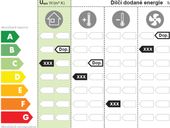
In connection with the implementation of the revised European Directive 2010/31/EU on the energy performance of buildings, certain legislative provisions such as Decree No. 148/2007, Coll. Replaced by Decree No. 78/2013, Coll. are currently amending. This article is focused on the changes associated with the energy certification of buildings, the "ENB", from the perspective of changes in the evaluation ENB.

8.4.2013
doc. Ing. Petr Kuklík, CSc., Ing. Hana Hasníková

This paper describes an investigation of historical timber members of roof structure at Masaryk railway station in Prague. In the paper is also presented an experiment, which deals with the influence of mechanical damage to timber members in the interpretation of the results of non-destructive measurement.

18.3.2013
doc. Ing. Petr Kuklík, CSc., Ing. Hana Hasníková

This paper deals with methods for determining the reliability of historical wooden structures and tries to outline the progress and shift in the methods used, problems or gaps in knowledge and research needs associated with this activity.

25.2.2013
Doc. Ing. Jaroslav Solař, Ph.D., VŠB TU Ostrava, Fakulta stavební, katedra pozemního stavitelství

Wood-destroying insects is one of the biological wood pests. Attacks the wood material, both individually and also in parallel with other decaying biological pests. Knowledge of principles for the design and implementation of a hot air disposal of wood-destroying insects is necessary for the reconstruction of historic buildings. Carefull consider from a conceptual point of view is necessary for the design for redevelopment of wooden elements affected by wood-destroying insects.


zpět na aktuální články
 
 
Reklama