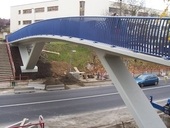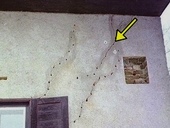
The article describes measuring for a period of 16 years of an experimental masonry object, horizontally prestressed using cables – monostrands. Specific problems od this method of strengthening are mentioned.
New Civil Code enacts special type of solidary obligation to remedy the defects of building constructed under contract for works. All subcontractors (suppliers) of constructor, investor`s technical supervisors or construction project designer are solidary responsible together with the constructor in case the defect can be attributed to the performance they provided. However, these parties need not to be the parties to the contract for works itself (and usually are not) as their obligation arises by law.
The remedies that the investor can claim on these co-debtors, however, are limited to right to demand the repair of the defect. Investor may demand remedy on any of the co-debtors and all the co-debtors are obliged to perform the remedy in full.
The investor has to give notice to the debtor within a reasonable time. The notice can be sent to any of the co-debtors but we advise all investors to give notice always to the constructor first or together with the other co-debtors.
The thesis deals with urban sprawl and suburbanization as the effects of changes in society. It presents the basic historical overview and describes the situation in contemporary Europe. The thesis focuses on description of negative aspects, in connection with formed urban sprawl.
This work presents and describes the historical background of suburbanization in the Czech Republic. It reflects on the causes and presents the facts, leading to their understanding.
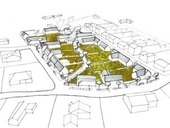
The practical part of the thesis is the application of acquired knowledge on the model, which is Brno-Útěchov. One of the peripheral parts of Brno that has grown significantly due to suburbanization in last few years.
Ideological study aims to show an alternative approach to this way of development. The main areas of interest are importance of public and private space, often neglected idea of neighborhood and the importance of privacy in terms of new houses in a face of village itself.
The New Civil Code (“NCC”) brings about a comprehensive enactment of culpa in contrahendo – “fault in conclusion of a contract”. This legal institution has so far completely absented from the Civil Code and only the court practice would offer some hint as to its applicability. NCC newly emphasises the principle of honest legal affair based on the good faith of the acting party. In specific provisions, NCC explicitly prohibits a party from negotiating a contract while lacking the will to conclude it as well as from abolishing negotiations in an advanced stage without a legitimate reason to do so. Further, contract parties have a mutual information duty regarding any factual or legal circumstances which may the other party deem relevant. If such information is privileged, though, the party which recieved it is bound not to misuse it or disclose it without proper legal grounds. Any act by a contracting party lacking to meet the aforesaid criteria establishes liability to pay damages.
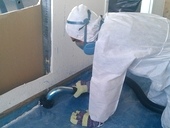
Asbestos is often mentioned in connection with the construction industry, especially with the school buildings. Wrong way of asbestos removal meant a multimillion cost of cleaning the property. Unfortunately, these cases do not cause a change in legislation that would regulate working with asbestos.
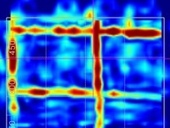
An integral part of a building survey is determining the location of steel reinforcements in building construction elements made of reinforced concrete. In the last decade, GPR came as one of the standard diagnostic methods. However, the equipment used until recently was characterized by its complexity and lengthy measurements, evaluation of which required a considerably professionally knowledgeable staff. The turning point was Hilti PS 1000, a GPR intended for use by common technicians during building surveys. This contribution evaluates the first experience with its use.
The concrete built in the structure is difficult to determine the static modulus of elasticity. One possibility is to measure the dynamic modulus of elasticity and subsequent conversion to static modulus of elasticity. This paper deals with mutual relationships between static and dynamic modulus of elasticity including practical examples of the determination of reduction factor.
The article describes the characteristics of claims for defects from contract for work according to the new Civil Code. The new Civil Code unifies the provisions on contract for work currently contained in both Civil and Commercial Code. The article describes the defects founding the liability of a contractor, reporting the defects and warranty, the rights resulting from the defects and the specifics of claims for defects when the subject of a contract is a building.
It is important for the work to be clearly specified in the contract. Differences from the contract are considered defects. It is vital to inspect the work after the handover for any differences from the contract. The ordering party has to report the defects to the contractor without undue delay. The statute of limitations for claiming the rights from defects is 2 years. The rights resulting from sales contract defects apply analogously to the contract for work. In case of substantial breach of contract the ordering party can ask for the delivery of a new work, repairs or resolution of a contract. Unsubstantial breach of contract allows for repairs or discount.
The last part of the article concerns specifics of claims for defects when the subject of a contract is a building. The ordering party cannot refuse to accept the building for minor defects. The statute of limitations for reporting hidden defects is 5 years in case of a building. The responsibility for defects in shared between the contractor, the maker of the documentation and the construction supervisor.
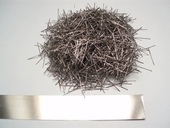
Steel fiber reinforced concrete (SFRC) with higher concentrations of fibers are still unattractive for investors. The paper presents the possibility of using metal waste to produce of wires, still suitable for the production of SFRC, but with a lower price than the known types of wires offered by current producers.
The article deals with a new product in the Czech market that is quickly getting to awareness of potential clients and gaining a significant place in the local real-estate market. Until recently, the inspection of immovable properties was an unknown concept. Nevertheless, in recent two years such assistance service is being more and more popular. Pertinent specialised inspection companies assist the real property buyer in eliminating potential risks that are related to selection and purchase of a given building. A competent certified inspector checks up to about 200 items of the building and compiles an expert report to help the client to correctly decide whether he should buy the given building or not. The inspector will acquaint the client with a real purchase price, precisely describe all the defects and how to correct them, and finally, he will hand over to the client a complete budget to cover the cost of necessary repairs.
In 2013 the inspection of real properties comes to one of the fastest growing segments of Czech economy. The people intending to buy any real property are more cautious and, now at the time of an economic uncertainty, they begin using the above relatively new assistance service in a large extent.
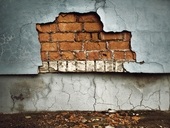
Moisture in moist buildings can be limited by the most different methods. Problems are divided into two papers. The author of paper analyses the conditions of moisture-spread in building in the first part of paper and he solves the selection of sanitation method with less frequent technology of realization. The concrete cause with utilization of air – insulation system then will present in the second part.
The paper contains basic information on the relationship between the contractor and the client as introduced by the new Civil Code. Firstly, it points to a fundamental difference in the concept of ownership of land and buildings which will not be, unlike the current state, separate. Yet the law allows exceptions to this rule, which are briefly explained in the article.
The main part of the text deals with the issue that is most pressing in construction of buildings. It is the responsibility for the quality of the work or project documentation. The paper deals with the obligation of a client to accept work in stages, addressing liability for latent defects, acceptance of the finished with reservation of latent defects and etc. In this context it should not be overlooked, that the general liable for defective work are together the contractor, subcontractors, maker of the documentation and construction supervisor. These entities may waive liability only if they demonstrate that they did not cause the defect themselves.
One of the options for the treatment of coal tailings is production a new kind of artificial aggregate on the self-burning principle. The aim of the work was to demonstrate the possibility of using this aggregate in concrete structures. Subject of the paper are not only the results obtained after 360 days of ripening, but also to compare them with the properties commonly manufactured concrete.
Application of the burning lime for masonry is known from the eldest ages. In history was empirically discovered, the properties of lime putties and mortars made from it can be modified adding various additives. Inorganic additives with latent hydraulic activity (natural pozzolana, thermal modified rocks) or organic additives (proteins, carbohydrates, organic acids as fruit juices etc.) were used. Beneficial influences of some additives were proven by contemporary science. Application of other additives seemed irrational from present point of view. The aim of this work was determined the influence of some historical additives on lime putties and mortar properties.
Paper will inform you about the results of a comparison of several hydrophobic additives. Building components based on plaster without special treatment generally have high water absorption (~ 30 %) and they are therefore not suitable for areas with high incidence of moisture, where they can be exposed to direct contact with water. The trend leads towards lighter building materials, which often leads to an increased proportion of open porosity and thus to increased absorption. A suitable solution is utilization of hydrophobic additive during the production of gypsum building elements. Appropriately chosen additive can significantly reduce water absorption, even at relatively low addition and high mass lightening of element.
The 70-ers and 80-bit of the last century were developed a number of standardized structural framing wood-based, which produced the then national wood processing plants. Several of these systems have been specifically developed for agriculture, in which wooden structures are preferably applied mainly for objects with increased aggressiveness environments such as. storage of fertilizers, stabling facilities etc. Some of these buildings still serve their original purpose even today, although their structures are weaknesses of different nature.